|
A 40-foot shipping container packed with high-value electronics, heavy industrial machinery, or palletized consumer goods faces an incredibly hostile journey the moment it is loaded onto an ocean vessel. Stacked five high on a container ship navigating the North Atlantic or the Pacific Rim, that steel box is subjected to violent, relentless physical forces for days or weeks on end. If there is even a two-inch gap between those pallets, that gap becomes a liability for catastrophic product destruction. In international maritime logistics, the standard rules of land-based over-the-road transport do more than fail—they invite disaster. At Superior Packaging Company, we understand that international ocean freight requires a completely different tier of cargo securement. This technical guide breaks down the unseen physics of ocean transit—specifically the rotational forces of roll, pitch, and yaw—and demonstrates why dunnage air bags are the single most effective, cost-efficient solution for filling voids and absorbing inertial shock on the open ocean. The Hidden Chaos of Maritime Logistics: Roll, Pitch, and Yaw To understand why traditional cargo securing methods fail at sea, logistics managers must look closely at the fluid, three-dimensional physics of ocean transit. Unlike standard trucking, where cargo primarily experiences linear forces such as sudden braking or forward acceleration, a container ship operates in an unpredictable environment with six degrees of freedom. These are split into three linear motions (surge, sway, and heave) and three highly destructive rotational motions: roll, pitch, and yaw. Roll: The Lateral Nightmare Roll represents the side-to-side tilting of a vessel along its longitudinal (front-to-back) axis. It is the most frequent and destructive force encountered in maritime shipping. When a ship rolls in heavy swells, cargo undergoes sustained lateral gravitational forces (G-forces). Without dynamic securement, entire rows of heavy pallets will lean, crush against the container’s interior corrugated steel walls, or collapse sideways into the adjacent rows. Pitch: The Vertical Slam Pitch is the up-and-down seesaw movement of the ship's bow and stern along its transverse (side-to-side) axis. As a vessel rides over a massive wave and plunges into the trough below, the cargo inside experiences rapid vertical acceleration followed by an immediate, jarring impact at the bottom of the arc. This repetitive slamming force shatters wooden pallets, ruptures steel strapping, and snaps traditional timber bracing. Yaw: The Torsional Twist Yaw occurs when ocean currents, crosswinds, or steering corrections cause the vessel to swing left and right around its vertical axis. This creates a rotational shear force inside the shipping container, forcing cargo units to twist, rotate, and slide diagonally. On a standard two-week transpacific voyage, an intermodal container endures these combined forces hundreds of thousands of times. This constant, rhythmic vibration and shifting is known as dynamic loading. Static bracing methods lack the elasticity to survive this continuous multi-directional assault. The Root Cause of Cargo Ruin The fundamental cause of transit damage inside a locked container boils down to two core variables: void space and inertial shock. When freight is loaded into an ocean container, it rarely fits perfectly from wall to wall. Natural gaps and empty spaces—known as voids—are created by standard pallet dimensions, varying packaging designs, and mandatory weight distribution requirements. If these voids are left unfilled, they become an immediate liability. Data from the World Shipping Council continuously confirms that cargo shifting due to improper packing and inadequate void securement remains a primary driver of preventable containerized losses globally. The Physics of Inertial Shock When a ship rolls violently, an unsecured pallet does not remain static; it slides across the empty void space. The actual damage does not occur while the pallet is in motion, but rather at the exact millisecond it terminates its slide against a rigid barrier. Because kinetic energy increases exponentially with velocity, even a tiny two-inch gap gives a heavy pallet enough running room to build up immense destructive force. When that pallet slams into the steel container wall or an adjacent cargo unit, its kinetic energy is instantly converted into an inertial shockwave. This shockwave pulverizes outer packaging, crushes corrugated boxes, and shatters the high-value components sealed inside.
By filling the void completely, the inflated air bag accomplishes two tactical logistics goals simultaneously:
Material Engineering: Bladder vs. Shell Superior Packaging Company engineers industrial-grade dunnage bags using a high-performance two-component system:
Why Dunnage Air Bags are Indispensable for Ocean Freight When evaluated against traditional lumber blocking, polywoven dunnage air bags provide distinct engineering and operational advantages that make them ideal for maritime logistics. Three-Dimensional Force Distribution When timber bracing is utilized, the entire shifting weight of the cargo is concentrated on the narrow, rigid points where the wood meets the pallet or crate. This concentrated mechanical stress frequently punctures outer packaging or collapses structural edges. Dunnage air bags eliminate this issue through surface area maximization. When inflated, the flexible polywoven bag molds precisely to the irregular contours of the cargo, distributing the shifting loads uniformly across the entire face of the pallet. This prevents localized pressure spikes and preserves packaging integrity. Elastic Memory and Shock Mitigation Unlike wood, metals, or rigid polystyrene foam, air compresses and rebounds. When a vessel pitches forward into a wave, the cargo shifts forward into the dunnage bag. The bag compresses slightly, absorbing the inertial shock wave and converting it into a temporary spike in internal air pressure. As the ship corrects its position, the bag expands back to its original volume. This "elastic memory" allows the pneumatic cushion to survive hundreds of thousands of wave impacts without structural degradation. Immunity to Container Rain and Humidity The interior climate of an ocean container crossing international waters is exceptionally brutal. Known across the shipping industry as "container rain," humidity levels swing violently as a vessel crosses different climate zones, causing massive condensation to pool on the ceiling and rain down onto the cargo. Wood bracing readily absorbs this moisture, causing it to warp, rot, splinter, and lose up to 50% of its structural holding power mid-voyage. Polywoven dunnage air bags are entirely hydrophobic. They retain 100% of their structural strength and air pressure regardless of the relative humidity or liquid water accumulation inside the container transport unit. Direct Compliance with the International CTU Code International maritime authorities strictly enforce cargo securement rules to protect vessels and port workers. The IMO/ILO/UNECE Code of Practice for Packing of Cargo Transport Units (CTU Code) explicitly mandates proper void management for international shipments. Failing to meet CTU Code requirements can result in customs delays, severe port fines, and the immediate rejection of insurance claims if a loss occurs at sea. Superior Packaging Company’s line of dunnage air bags meets or exceeds these rigorous international testing standards, providing shippers with an audit-ready compliance profile. Comparing Securement Methods for Maritime Containers To visualize why dunnage air bags represent the global standard for ocean cargo protection, look at how they compare directly to alternative methods across key operational and physical performance metrics.
The Economic and Environmental ROI of Pneumatic Bracing Switching from archaic timber securement to an engineered dunnage air bag system yields measurable financial returns for industrial exporters, affecting both labor metrics and bottom-line transit losses. Reductions in Total Cost of Ownership (TCO)
Aligning with Sustainable Supply ChainsModern global enterprises are under strict corporate mandates to eliminate single-use plastics and non-recyclable materials from their international supply chains. Superior Packaging Company’s polywoven dunnage air bags are manufactured with sustainability in mind. They are completely reusable and built from high-grade polyolefins that can be easily collected, ground down, and reprocessed into new industrial goods—helping your business hit its carbon reduction and zero-waste targets. Frequently Asked Questions (FAQ) What specific level of dunnage bag is required for ocean freight? Dunnage air bags are categorized into levels (Levels 1 through 5) based on their burst strength and wall thickness, as regulated by the Association of American Railroads (AAR) and international maritime bodies. For standard intermodal ocean containers carrying light-to-medium palletized freight, a Level 1 or Level 2 polywoven bag is typically the global industry standard. Ultra-heavy loads like steel coils, paper rolls, or heavy machinery require Level 3 or higher. What is the correct operating pressure for an ocean freight dunnage bag? Ocean freight dunnage bags operate at relatively low pressures but exert massive total holding force due to their large physical surface area. A typical operating pressure for a standard Level 1 polywoven bag ranges between 1.5 to 3.0 PSI (pounds per square inch). It is critical to utilize specialized, calibrated inflation tools with automatic shut-off valves to ensure consistent pressure and prevent over-inflation. Can changes in temperature or altitude cause a dunnage bag to pop during transit? No, provided the bag was inflated properly using professional inflation equipment. High-quality dunnage bags feature significant safety margins built into their construction, often maintaining a 3:1 or 4:1 ratio between actual burst pressure and standard working pressure. This gives the air chamber more than enough headroom to safely absorb atmospheric pressure changes or intense thermal expansion caused by tropical transit routes. Partner with Superior Packaging Company
The open ocean is completely unforgiving to improperly secured freight. Do not allow your company’s high-value exports to be destroyed by an easily managed void space. Secure your international shipments with a system specifically engineered to withstand the relentless rotation of roll, pitch, and yaw. At Superior Packaging Company, we deliver custom-engineered cargo security solutions rather than off-the-shelf commodities. Our team of transit safety experts can analyze your specific loading configurations, calculate your exact void-reduction metrics, and supply the ideal combination of high-strength polywoven dunnage air bags and high-speed inflation tools to safeguard your brand's reputation worldwide. Damage prevention inside a trailer or railcar is too often calculated as a purely mechanical challenge. Logistics managers focus on cargo dimensions, physical void measurements, and the structural placement of heavy-duty air bags to restrict freight movement during multi-mode hauls. Yet, some of the most catastrophic securement failures occur when there is no erratic braking, no violent railcar coupling, and no rough highway segments. Instead, the failure stems from a silent, invisible catalyst: atmospheric degradation. When freight crosses regional boundaries, transitions from air-conditioned distribution hubs into stagnant intermodal containers, or waits on ocean docks during peak summer cycles, it enters an environmental gauntlet. High temperatures paired with elevated relative humidity act as structural toxins to standard industrial packaging fabrics. Corrugated dunnage - frequently relied upon to serve as bulkheads, buffer boards, and load-distribution panels-can lose its structural integrity within a matter of hours if improperly specified. Understanding the physical and chemical mechanics of humidity degradation is no longer just a technical specialty; it is an economic imperative for companies aiming to preserve their transit margins and protect their workforces. The Microscopic Crisis: How Heat and Humidity Attack Cellulose To understand why a thick, heavy-duty corrugated sheet collapses inside a humid shipping container simply look at a piece of paper. Corrugated dunnage is derived primarily from wood pulp fibers composed of cellulose molecules. Cellulose is naturally hydrophilic, meaning it possesses a strong structural affinity for water. On a microscopic level, cellulose chains are held together by a network of hydrogen bonds. These bonds provide paperboards with their characteristic stiffness, puncture resistance, and compression strength. When relative humidity climbs, a concentration gradient is established between the ambient moisture in the air and the moisture profile of the corrugated material. The wood fibers act as a sponge, pulling water vapor out of the atmosphere and into the paper matrix. As water molecules infiltrate the paper structure, they force their way between individual cellulose chains, disrupting the existing hydrogen bonds and replacing them with weak water-to-cellulose connections. This process, known as moisture absorption equilibrium, causes the fiber walls to swell, soften, and lose their ability to sustain mechanical pressure. The Scientific Reality: Corrugated materials achieve an equilibrium moisture content (EMC) based directly on surrounding conditions. At 50% relative humidity, a standard corrugated board maintains a safe internal moisture level of roughly 6% to 7%. When humidity levels scale to 90% RH or above, the internal moisture content of un-engineered paper board surges past 15%, triggering a fast and permanent collapse of the material's load-bearing properties. Heat accelerates this destructive process exponentially. Higher temperatures increase the kinetic energy of water vapor molecules, speeding up their penetration into the dense fiber layers of the dunnage. Furthermore, enclosed shipping containers exposed to direct sunlight experience the "greenhouse effect," with internal air temperatures regularly exceeding 130°F (54°C). Under these thermal conditions, the chemical adhesives used to bond the corrugated mediums—historically starch-based formulations—can soften or hydrolyze, separating the linerboards from the fluted internal medium and inducing instantaneous delamination. The Mechanics of Structural Softening The reduction in load-bearing capability is not a minor deviation; it is an extreme physical cliff. Packaging engineers evaluate corrugated performance through specific standardized structural metrics, such as the Edge Crush Test (ECT) and Flat Crush Test (FCT). ECT values measure the cross-directional crushing strength of a corrugated board, which dictates how effectively a panel can resist vertical or lateral buckling forces when compressed between heavy pallets and expanding dunnage air bags. Under the stress of high-moisture absorption, the structural math deteriorates rapidly. The drop-off in mechanical strength as relative humidity elevates follows a severe trajectory:
When standard corrugated dunnage loses over half its structural strength due to environmental moisture, its capability to distribute pressure collapses. If an industrial air bag is inflated against a weakened corrugated buffer panel, the bag will punch straight through the softened board rather than spreading the force uniformly across the freight face. This localized structural puncturing compromises the tension of the entire securement design, creating internal cargo spaces that lead to shifting, product destruction, and dangerous unloading hazards at the delivery destination. The Three Vectors of Environmental Exposure in Modern Logistics To implement an effective securement program, operators must recognize where high-humidity risks emerge along the supply chain pipeline. Moisture exposure rarely happens in isolation; it is usually driven by one of three core logistics factors: 1. The Cross-Climate Multi-Mode Intermodal Run Consider a shipment originating in a low-humidity region that travels via rail or highway toward a coastal distribution node or international shipping port. As the freight moves across varying environmental zones, the internal conditions of the trailer change constantly. When warm, humid air makes contact with cold steel container walls during nighttime temperature drops, it produces "container rain"-a phenomenon where condensation forms on the ceiling and walls, dripping down onto the securing dunnage and initiating immediate structural softening. 2. Stagnant Warehouse and Staging Environments Many distribution hubs are built for scale rather than climate management. Facilities located in regions prone to heavy summer humidity often store raw packaging components and corrugated dunnage sheets in non-climate-controlled storage zones. If dunnage sheets sit in a high-humidity warehouse environment for weeks prior to being used on the loading dock, they are already structurally compromised before they ever enter a trailer. Loading docks that operate with open bay doors during summer rain storms allow humid air to flow directly into trailers, trapping moisture inside the load before the rear doors are sealed. 3. Cross-Ocean In-Transit Delays Ocean freight represents the highest-risk category for atmospheric degradation. Cargo vessels endure extended exposures to salt spray and relentless marine humidity. If an intermodal container waits on an asphalt port terminal for customs checks or vessel staging under intense summer heat, the internal atmospheric breakdown accelerates. Standard unengineered corrugated buffer panels turn soft and lose their structural integrity under these prolonged marine conditions.
Heavy-Duty Poly-Coated Linerboards One of the most effective shields against humidity degradation is the integration of an engineered polymer barrier. Poly-coated corrugated boards utilize an ultra-thin extrusion layer of polyethylene directly applied onto the exterior kraft linerboard face. This plastic film acts as a reliable vapor barrier, preventing water molecules from contacting the cellulose fibers beneath. Poly-coating ensures that even if a container suffers from high internal condensation or relative humidity spikes, the structural core of the dunnage panel remains dry and rigid. Water-Resistant Adhesives (WRA) Standard corrugated boards rely on basic starch adhesives that break down when exposed to moisture. Moisture-resistant corrugated dunnage must be engineered using specialized Water-Resistant Adhesives (WRA) or Water-Proof Adhesives (WPA). These specialized chemical blends are reinforced with urea-formaldehyde or acrylic polymers that create highly cross-linked chemical bonds during the corrugation curing phase. These bonds do not dissolve or soften when exposed to liquid moisture or extreme heat, keeping the structural fluted medium perfectly secured to the outer liners through every climate transition. High-Performance Heavy-Weight Fluting Configurations When shipping through high-humidity corridors, moving from a standard single-wall profile to a heavy-duty double-wall or triple-wall configuration provides an extra layer of mechanical insurance. Heavy-weight liners use longer, virgin wood fibers that feature tighter internal hydrogen bonding than recycled equivalents. A double-wall panel constructed with moisture-resistant adhesives provides redundant layers of structural stability, ensuring that even if the outermost paper layer encounters minimal surface moisture, the inner core retains its original edge crush rating to prevent load shifting. The True Cost of Securement Failure: Why Commodity Sourcing Costs More Purchasing teams are often tempted to evaluate packaging materials strictly through the lens of upfront per-unit pricing. A standard commodity-grade corrugated board is invariably cheaper on a procurement spreadsheet than an engineered, moisture-resistant alternative. However, viewing dunnage as a basic commodity represents a significant financial blind spot for modern supply chains. When a dunnage panel degrades and allows a load to shift, the total cost of that failure far outstrips any marginal savings achieved at procurement. The economic fallout of a securement failure includes multiple hidden cost drivers:
Atmospheric moisture is a constant reality in regional and international commerce. While logistics operators cannot control global summer weather or eliminate humidity inside sealed intermodal containers, they can control how their packaging hardware responds to these conditions. Relying on commodity-grade paperboard for heavy-duty load securement during high-heat and high-humidity seasons introduces a dangerous point of failure into your logistics network. At Superior Packaging Company, we design and manufacture high-performance cargo securement solutions engineered to survive the toughest transit environments. Our durable, moisture-resistant corrugated dunnage lines provide the structural consistency needed to maintain predictable load stability across every geographic boundary and climate zone. By pairing premium raw materials with water-resistant adhesives and advanced barrier technologies, we ensure that your cargo remains securely locked in place from the origin dock to the final destination.
Don't allow the seasonal humidity shift to undermine your operational safety and damage-prevention standards. Contact the logistics engineering team at Superior Packaging Company today to evaluate your current load configurations and integrate moisture-defying dunnage solutions built for the demanding conditions of modern global transport. The pallet is the fundamental unit of global trade—a silent workhorse that keeps modern commerce in motion. Usually, when we discuss load securement, the conversation gravitates toward a bumpy highway, a swaying cargo ship, or the jerking motions of a rail car. But at Superior Packaging Company, we know that the most critical phase of load safety starts much closer to home. The true test of a pallet’s integrity doesn't happen on the interstate; it happens in the aisles of your warehouse. From the moment a pallet is lifted into a high-density rack to the second it is maneuvered around a tight corner by a forklift, it poses a potential risk to your most valuable asset: your team. Protecting them from "falling pallet" incidents is a challenge that requires a deep understanding of the physics of motion, the material science of containment, and the strategic use of structural reinforcements. The Warehouse Hazard: Why Internal Safety Comes First Every year, thousands of warehouse workers are injured by falling objects. While we often focus on heavy machinery safety, a stationary pallet sitting 30 feet in the air is often the most dangerous object in the building. A standard pallet load can weigh anywhere from 1,000 to 2,800 pounds. When that much mass becomes unstable at height, it doesn't just "fall"—it accelerates with lethal force.
Logistics and freight professionals know that the "Spring Thaw" is more than just a change in weather; it is a direct threat to equipment and inventory. While the rest of the country looks forward to blooming flowers and warmer temperatures, the transportation industry is bracing for "Pothole Season."
The Physics of the Pothole: What Happens Inside the Trailer? When a Class 8 truck hits a pothole at highway speeds, it creates a kinetic chain reaction. The suspension of the truck absorbs a portion of that energy, but a significant amount is transferred directly into the trailer bed. This energy manifests in two primary ways: Sudden Shock and Sustained Vibration. 1. Sudden Shock (The Vertical G-Force) For cargo that isn’t properly secured, a sudden drop followed by a sharp upward impact creates a momentary state of weightlessness followed by an impact force that can exceed several G's. Without a cushioning medium, that force travels through the pallet, into the primary packaging, and directly into the product. This is how glass breaks, electronics fail, and liquid containers burst.
More Than Just "Filling a Hole" For years, the industry referred to dunnage air bags simply as "void filler." This terminology does a disservice to the technology. While dunnage bags do fill the empty spaces between pallets, their primary function in the spring is energy dissipation. Unlike rigid dunnage—such as wood blocking or corrugated bulkheads—an air bag is a dynamic support system. Think of it as an auxiliary suspension system for your freight. How Air Bags Distribute Pressure When a pallet shifts during a bumpy ride, a rigid brace provides a hard "stop." This sudden stop can be just as damaging as the initial bump. However, a dunnage air bag from Superior Packaging Company works through the principle of Pascal’s Law: Pressure exerted anywhere in a confined incompressible fluid is transmitted equally in all directions throughout the fluid. When your cargo moves against an inflated air bag, the air inside compresses and redistributes that force across the entire surface area of the pallet. Instead of a high-pressure point-of-impact, the force is "smothered" and neutralized. This is the "Air Bag Advantage."
Choosing the Right Protection: Not All Air Bags Are Equal At Superior Packaging Company, we emphasize that the "Advantage" is only as strong as the material being used. To combat the rigors of spring roads, you must match the bag to the load. Paper vs. Poly: The Durability Debate
Understanding Levels (1 through 5) Dunnage bags are rated by levels. A Level 1 bag is perfect for lightweight truck shipments, but if you are shipping heavy industrial equipment or beverages across pothole-ridden interstates, you may need a Level 3 or higher. Using a bag with insufficient burst strength is like wearing a light jacket in a blizzard—it’s better than nothing, but it won’t solve the problem. The ROI of Prevention: The True Cost of Damaged Goods Logistics managers often look at dunnage as an "extra cost." However, when you factor in the realities of spring road conditions, the dunnage air bag is actually a profit-protection tool. Consider the "Hidden Costs" of a single damaged pallet:
Training Your Team for Spring Success Even the highest-quality dunnage air bag will fail if it isn't installed correctly. As the roads get rougher in the spring, it is vital to retrain your loading dock team on the nuances of air bag placement. Proper Bag Positioning A common mistake is placing the bag too high or too low against the pallet. For maximum protection against road vibration, the bag should be centered vertically and horizontally against the load face. If the bag is too high, it can cause the top of the pallet to "fan out" during a bump; if it's too low, it won't prevent the top-heavy swaying that leads to tipped loads. The "Hand Check" Method Before the trailer door is closed, your team should perform a physical check of the inflated bags. A bag should be firm to the touch—similar to a fully inflated basketball—but should still have enough "give" to allow for thermal expansion or pressure changes during transit. Over-inflation can lead to burst bags, while under-inflation allows for "load creep." Best Practices for Spring Shipping To maximize the Air Bag Advantage, your team needs to follow a specific "Spring Protocol" for loading and bracing:
The Sustainability Factor: A Greener Road Forward In 2026, we cannot discuss packaging without discussing the environment. One of the often-overlooked advantages of modern dunnage air bags is their sustainability profile compared to traditional timber or foam bracing. Many of the bags supplied by Superior Packaging Company are both reusable and recyclable. Unlike wood blocking, which often splinters or breaks after a single use—ending up in a landfill—polywoven air bags can be deflated, rolled up, and sent back to the origin point for reuse. Furthermore, because air bags are incredibly lightweight, they add negligible weight to the total shipment. In a season where road weight limits are strictly enforced due to soft roadbeds, every pound saved in packaging is a pound earned in product. This helps your company hit its ESG (Environmental, Social, and Governance) goals while simultaneously protecting your cargo from the elements. By choosing a recyclable polywoven or paper option, you're telling your customers that you care as much about the planet as you do about the quality of the goods you deliver. Advanced Load Stabilization Techniques While air bags provide the primary cushioning, spring roads often require a multi-layered approach to stabilization. For loads containing liquids or hazardous materials, combining dunnage bags with anti-slip mats can provide a secondary layer of protection. These mats increase the friction between the pallet and the trailer floor, working in tandem with the air bags to counteract the horizontal forces generated by sudden braking or swerving to avoid road hazards. Additionally, ensuring that pallets are wrapped tightly is crucial. If the internal boxes are loose within the stretch wrap, the air bag will secure the pallet, but the product inside will still suffer from vibration damage. A "spring-ready" load is one where the product, the pallet, and the dunnage work together as a single, unified unit. Bottom Line: Don't Let the Roads Dictate Your Success
The spring thaw is a force of nature. We cannot stop the potholes from forming, and we cannot guarantee that every highway will be smooth. What we can control is how we prepare the cargo for the journey. The Air Bag Advantage is about more than just air—it’s about the peace of mind that comes from knowing your freight is suspended in a protective cushion that can handle whatever the American highway system throws at it. As the roads get rougher over the next few weeks, don't leave your cargo's safety to chance. Invest in high-quality dunnage air bags from Superior Packaging Company. Lock your loads, cushion your cargo, and ensure that when your customer opens that trailer door, they see a perfectly upright, undamaged shipment—no matter how many potholes were hit along the way. Your reputation is built on the condition of your delivery; make sure it’s protected by the best. For logistics managers and fleet operators, the "D-Ring" is often seen as the ultimate symbol of cargo securement. We have been trained to believe that if a load is strapped, chained, or ratcheted down to a D-ring, it is compliant. But as any experienced driver or safety officer knows, straps have their limits. When you are hauling palletized freight with significant gaps between the rows, or "voids," even the tightest straps can’t prevent the internal shifting that leads to tipped loads, crushed packaging, and—most importantly—costly FMCSA violations. This is the D-Ring Dilemma: Straps only secure the perimeter and the downward force; they do nothing to address the lateral and longitudinal "voids" that the Department of Transportation (DOT) and Federal Motor Carrier Safety Administration (FMCSA) scrutinize during inspections. Superior Packaging Company is helping carriers bridge this compliance gap by utilizing Dunnage Air Bags to create a truly stabilized, compliant, and road-ready trailer environment. The Legal Necessity: Understanding FMCSA § 393.100 The FMCSA is not merely interested in whether your cargo stays inside the trailer; they are legally focused on whether the cargo moves within the trailer. Under FMCSA § 393.100, "Cargo must be contained, immobilized, or secured... to prevent it from shifting to such an extent that the vehicle’s stability or maneuverability is adversely affected." When an inspector opens your rear doors, they are looking for "voids." If there is a gap greater than 12 inches that isn't filled or braced, you are at risk for a "Failure to Secure Cargo" violation. While D-rings and straps provide the vertical and longitudinal tension, they often fail to provide the lateral immobilization required for modern high-density loads. This is where dunnage air bags from Superior Packaging Company become a legal necessity.
Compliance Through Proper Installation To meet FMCSA standards and avoid the "D-Ring Dilemma," the installation of your dunnage must be as intentional as your driving. An improperly used air bag is just as non-compliant as a loose strap. At Superior Packaging Company, we emphasize three pillars of compliant air bag usage:
Eliminating the "Side-to-Side" Risk Many "D-Ring" setups are excellent at preventing cargo from sliding toward the back door, but they are notoriously poor at preventing side-to-side (lateral) shifting. During a sharp turn or an evasive maneuver, gravity pulls the load toward the trailer walls. If there is a lateral void, the load shifts, the center of gravity changes, and the risk of a rollover increases significantly. By using Dunnage Air Bags to fill the lateral gaps between pallet rows, you are effectively "shimming" the entire load against the trailer's structural members. You are no longer relying on the tension of a strap; you are relying on the physics of air pressure to keep the trailer’s weight distribution centered and stable. The Economics of Compliance A single FMCSA violation for "Cargo Securement" can result in thousands of dollars in fines, an increase in your CSA (Compliance, Safety, Accountability) score, and potentially a "Down-of-Service" order that leaves your driver stranded. When you compare the cost of a Dunnage Air Bag to the cost of a single rejected load or a DOT fine, the ROI is undeniable.
Mastering the Load with Superior Packaging Company
The "D-Ring Dilemma" is solved when we stop viewing cargo securement as a choice between straps and dunnage. The most compliant, safest fleets in the country use a hybrid approach: Straps for downward tension and Dunnage Air Bags for void filling and lateral immobilization. Don't wait for an inspection or a shifted load to realize your securement strategy is incomplete. By integrating properly installed dunnage air bags into your loading protocol, you ensure that every trailer that leaves your yard is in total compliance with FMCSA standards and optimized for the challenges of the road. Is your fleet truly compliant? Contact Superior Packaging Company today for a securement audit and learn how our dunnage solutions can eliminate your "D-Ring Dilemma." The journey from a loading dock to a final destination is never a completely smooth ride. Whether cargo is traveling by rail, sea, or over-the-road trucking, it is subjected to a constant barrage of physical forces. Shifting loads, sudden braking, sharp turns, and the vibrations of the road pose a persistent threat to the integrity of your products. While many shippers recognize the importance of using dunnage air bags to fill voids, truly mastering the technical nuances of placement and air pressure is what separates basic load securement from superior cargo protection. At Superior Packaging Company, we believe that every shipment deserves a custom-fit security strategy that prioritizes stabilization. Understanding the Mechanics of the Void The fundamental purpose of a dunnage air bag is to eliminate movement. In a trailer or shipping container, any empty space— a "void"—is an opportunity for disaster. When a vehicle slows down or turns, momentum carries the cargo forward or sideways. If there is a gap, the cargo gains speed before hitting a wall or another pallet, leading to crushed packaging, broken seals, or total product loss. To master placement, you must first understand that not all voids are created equal. The most critical area to address is the longitudinal void, or the space between the rows of pallets. However, lateral voids and the space between the cargo and the rear doors are equally important. When you utilize dunnage solutions from Superior Packaging Company, the goal is to create a "bulkhead" effect. This means the air bags should transform individual pallets into a single, unified block of weight. When the entire load moves as one cohesive unit, the risk of individual packages shifting and sustaining damage is virtually eliminated.
You must also be mindful of what the bag is pushing against. Air bags should always be placed against flat, sturdy surfaces. If a bag is positioned against an irregular shape, a sharp corner, or a fragile crate, the pressure of inflation can actually cause the damage you are trying to prevent. At Superior Packaging Company, we often recommend using corrugated void fillers or buffer sheets in conjunction with air bags to create a smooth, even surface for the bag to press against. The Critical Balance of PSI Once the bag is perfectly positioned, the focus shifts to inflation. This is where the technical mastery of PSI—pounds per square inch—becomes the deciding factor in your shipping success. Air pressure is the force that holds your cargo in place, but it is a delicate balance. Under-inflation is perhaps the most common cause of dunnage failure. If the PSI is too low, the bag feels "squishy." While it might fill the gap visually, it won't have the structural integrity to resist the tons of force generated by a shifting load. During transit, an under-inflated bag will simply compress further, allowing the cargo to gain momentum and crash into its surroundings. Conversely, over-inflation is equally dangerous. Every dunnage bag has a rated "burst pressure" and a "working pressure." If you exceed the recommended PSI, you risk a mid-transit rupture. Even if the bag doesn't burst, excessive pressure can bow the walls of a shipping container or crush the very products you are trying to protect. This is particularly true for "soft" cargo, such as boxed consumer goods or paper products. Mastery of PSI involves knowing the exact pressure required to hold the weight of the specific commodity without compromising the packaging.
Factors That Influence Pressure Changes Mastering PSI also requires an understanding of environmental variables. Air is a gas that expands and contracts based on temperature and altitude. If you inflate a dunnage bag to its maximum working pressure in a hot warehouse in the South and then ship it through a cold mountain pass, the air inside will contract, potentially leaving the load loose. The most significant factor, however, is altitude. When a truck climbs to a higher elevation, the external atmospheric pressure decreases. This causes the air inside the dunnage bag to expand. If a bag was already at its limit at sea level, the climb over a mountain range could cause it to exceed its burst pressure. When planning your logistics routes, it is vital to account for these changes and leave a "safety margin" in your PSI settings to allow for natural expansion without risk of failure.
Implementing a Professional Training Program
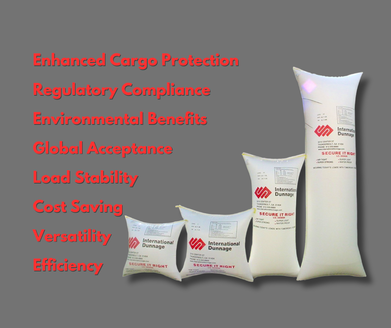
The final step in mastering dunnage air bag usage is education. Your warehouse team is on the front lines of cargo protection. If they aren't trained on the nuances of gap measurement, bag selection, and precise inflation, your investment in materials won't reach its full potential. We recommend conducting regular training sessions that demonstrate the "wall-to-wall" securement method. Show your team the difference between a properly centered bag and one that is off-balance. Let them see the effects of over-inflation on a test box. Superior Packaging Company also has a YouTube page which has various training videos to help set you up for success! By fostering a culture of precision and care, you ensure that every shipment leaving your facility is received intact by your customers. Mastering the art of dunnage air bag placement and PSI is a blend of physics, geometry, and high-quality equipment. By focusing on total surface contact, strategic positioning, and calibrated inflation, you can significantly reduce transit damage and improve the overall efficiency of your logistics operation. Safe shipping is not a matter of luck; it is a matter of preparation. When it comes to shipping, the "last mile" often gets all the glory. However, for manufacturers and distributors, the most critical miles are the ones spent inside a dark trailer or railcar. Cargo securement is the silent guardian of your bottom line. When goods shift during transit, the results are catastrophic: damaged inventory, insurance headaches, rejected loads, and strained customer relationships. At Superior Packaging Company, we believe the "Gold Standard" of cargo securement is the dunnage air bag. But "air bags" are not a one-size-fits-all solution. Using a bag designed for a local delivery truck inside a cross-country railcar is a recipe for disaster. In this blog, we will explore the critical differences between dunnage air bag levels—from Level 1 (OTR) to Level 5 (Heavy Rail)—to ensure you choose the correct strength for your mode of transport. What is a Dunnage Air Bag? At its core, a dunnage air bag consists of a polyethylene inner bladder that holds compressed air, encased in a durable woven polypropylene outer shell. Their primary job is to fill the empty spaces between pallets. By exerting constant pressure against the cargo, the bags lock the load in place, absorbing the kinetic energy and vibrations of transport.
Why it matters: Using a Level 1 bag in a truck is cost-effective and efficient. However, Level 1 bags are not rated for the violent "shunting" or "coupling" forces found in rail transport. If you use an OTR bag on a train, the sudden impact of railcars connecting can cause the bag to burst, leaving your cargo completely unsecured.
Level 2 & 3: Medium-Duty Rail
The Hidden Danger: Sharp Edges and Friction Even the strongest Level 5 bag has an Achilles' heel: punctures. An air bag is only effective as long as it stays inflated. If you are shipping cargo with sharp corners, wooden crate splinters, or exposed nails on pallets, you risk a "slow leak" or a total blowout. This is where integrated packaging solutions come into play. To reach the "Gold Standard" of protection, Superior Packaging Company recommends a multi-layered approach: 1. Corrugated Dunnage (Buffer Sheets) Before inflating your air bag, place a sheet of heavy-duty corrugated dunnage between the bag and the cargo. This acts as a puncture-resistant shield. The corrugated board distributes the pressure of the bag evenly across the face of the pallet while protecting the bag's fabric from jagged edges or protruding staples. 2. Anti-Slip Paper (Friction Mats) While the air bag provides the lateral force to hold cargo in place, Anti-Slip Paper works on the floor. By placing high-friction paper between the pallet and the trailer floor, you significantly reduce the amount of "creep" or sliding the cargo can do. When used together, the air bag and anti-slip paper create a "locked" environment where the cargo moves with the vehicle rather than against it.
The Superior Packaging Comapny Advantage
At Superior Packaging Company, we don't just sell bags; we sell peace of mind. Navigating the AAR regulations and shipping requirements can be complex, but getting it right is the difference between a successful delivery and a costly insurance claim. Our team can help you audit your current shipping lane, measure your voids, and recommend the exact level of dunnage bag and protective corrugated sheeting you need to ensure your product arrives in the same condition it left the warehouse. Ready to elevate your shipping standards? Contact Superior Packaging Company today for a consultation on your dunnage needs. Let’s find the perfect fit for your cargo. In our usual holiday spirit, we are excited to bring our own lyrical version of Carnie and Wendy Wilson's "Hey Santa!" So start humming along and have a little fun as we acknowledge the similarity of "Santa" and our fearless leader, Tom "Franta's" names. We did when we wrote it! Happy Holidays everyone! The truck is now loading with freight tonight. The shipment must be safe. We're hoping it's strapped, but the load's nowhere in sight. And we wonder if the shrink-wrap will break.
Hey, Franta, hey, Franta (Franta) We'll wrap with all our might. Hey, Franta, hey, Franta (Franta). Keep the cargo safe tonight. Why does it feel like your boxes are sliding. Even by the load bars? The driver said that he'd secure it quickly. But now it's almost departure. The semi-truck driving down the street is. Such a sight to see. But all the cargo sent by me, They don't mean a thing without tension please. Hey, Franta, hey, Franta (Franta). We'll strap with all our might. Hey, Franta, hey, Franta (Franta). If you hear me won't you hurry? Bring securement tonight. I know your warehouse is full inside. Won't you stop and give all this freight a ride? We'll be sure the load is braced this Christmas, oh. The cargo shipped by the sea is such a sight to see. But all the floating on the sea. They don't mean a thing, Franta please hear me. Hey, Franta, hey, Franta (Franta). We'll wrap with all our might. Hey, Franta, hey, Franta (Franta). If you hear me won't you hurry? Bring securement tonight. The cargo is covered, the load is complete. The straps are tight and fast I hear the doors latch, oh, can it be? My shipment is staring back at me. Hey, Franta, hey, Franta (Franta). I guess you heard me tonight, yeah. Hey, Franta, hey, Franta (Franta). We're ready for the road with the Superior system tonight. Secure it right, secure it right, secure it right. With our cargo tonight. (Hey, Franta) Secure it right, secure it right, secure it right. (It's shipping time) With our cargo tonight. Secure it right, secure it right, secure it right. (Hey, Franta, it's Christmas time) With our cargo tonight. We'll have a damage-free delivery, baby (Secure it right, secure it right, secure it right it's Christmas time) Oh, hey Franta (Secure it right, secure it right, secure it right, it's Christmas time) Hey, Franta (Secure it right, secure it right, secure it right, it's Christmas time) Less-Than-Truckload (LTL) shipping is an incredibly complex system that allows businesses to move small volumes of freight economically, ensuring that everyone, from boutique retailers to major manufacturers, can deliver goods efficiently. However, every logistics manager knows that LTL comes with a massive, inherent risk that far outweighs its efficiency: the void. In a Full Truckload (FTL) shipment, freight is tightly packed from front to back, often locking together for mutual support. In LTL trailers, this stable environment is impossible. Carriers consolidate multiple, diverse shipments, resulting in unavoidable empty spaces—or voids—between pallets, particularly after initial loading or during mid-route rearrangement. When that LTL truck hits the highway, those voids become massive liabilities. Every turn, every brake application, and every sudden acceleration subjects the unsecured cargo to intense lateral and longitudinal forces, allowing freight to shift, rub, crash, and ultimately, arrive damaged. This is not a problem solved by simply shoving a piece of foam into the space. The shifting freight requires an engineered, dynamic solution that can react to the physics of transit. At Superior Packaging Company, we know that Dunnage Air Bags (DABs) are not just a simple fix—they are the indispensable tool for securing partial loads and eliminating the void hazard. The Anatomy of LTL Damage: Why Wood Fails The traditional methods of securing freight in an LTL environment are inherently flawed because they are static. Wood bracing, often called a bulkhead, is time-consuming to build, costly in labor, and often fails for several reasons:
Furthermore, DABs provide superior stability against the lateral forces that dominate LTL shipping. As the truck takes a tight turn, the bag pushes against the load, preventing the top layers from leaning or collapsing outward. This feature is paramount for preventing the dreaded "pyramiding" collapse of stacked cartons. Maximizing Efficiency and Safety in Your LTL OperationFor LTL freight carriers who are constantly moving and rearranging loads, efficiency and safety are non-negotiable. Dunnage bags excel here, providing both a competitive edge and increased peace of mind: A. Speed and Labor Savings
Choosing the Right Bag for Your Freight Dunnage bags are available in various material strengths (Paper, Vinyl, Woven Poly) and sizes to fit different void widths. Choosing the right bag ensures maximum protection while minimizing costs.
Moral of the Story: Stop Treating Damage as Inevitable
In the LTL world, damage isn't an accident—it’s the predictable result of untreated voids. When you choose Superior Packaging Company's Dunnage Air Bags, you're not just buying an inflation tool; you’re investing in a sophisticated, dynamic securement system that adapts to the physics of transit. Stop budgeting for the 11% of unit loads that suffer damage during transit. Start demanding reliable delivery. Our Dunnage Air Bags ensure your cargo maintains integrity throughout its journey, protecting your product, your people, and your hard-earned reputation. Ready to conquer the LTL void? Talk to our securement experts today. Decoding Shipping Regulations: Staying Compliant with Packaging and Cargo Securement Standards10/16/2025
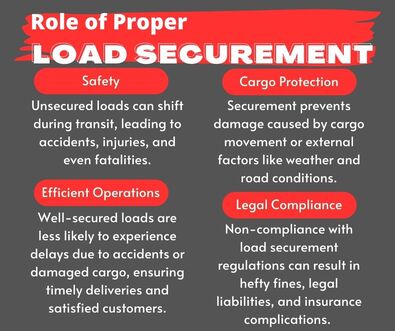
The world of logistics is changing fast. For decades, the primary goals of shipping were simple: get the product from point A to point B as quickly and affordably as possible. But today, a new set of priorities has entered the conversation, and they are here to stay. Businesses are now facing stricter regulations and a growing demand for a supply chain that is not only efficient but also safe and sustainable. The pressure to reduce your environmental footprint, prevent costly cargo damage, and ensure worker safety has never been greater. Navigating this new landscape can be a challenge. But what if staying ahead of these regulations wasn't a burden, but an opportunity? At Superior Packaging Company, we believe that a proactive approach to compliance is the key to building a more resilient, profitable, and responsible business. Our suite of packaging and securement solutions is designed to do more than just protect your cargo; they provide the tools you need to meet modern demands and build a better supply chain. The New Era of Shipping Regulations The push for a more sustainable and secure shipping industry is being driven by both consumer demand and legislative action. On a global scale, we're seeing an increased focus on corporate responsibility, with many brands committing to reducing their plastic use and minimizing their carbon footprint. This trickles down to logistics, where the materials used for securement and packaging are now under scrutiny. Simultaneously, safety standards are being continually refined. Regulations related to load securement for freight, particularly in rail and truck transport, are becoming more stringent. The goal is to prevent cargo from shifting in transit, which can lead to catastrophic accidents, costly damage, and injuries to workers during loading and unloading. Businesses that fail to meet these evolving standards face significant fines, expensive claims, and a damaged reputation. The Stakes Are High: Why Compliance Matters Compliance isn't just about avoiding a penalty. Failing to meet modern shipping standards has a tangible and often significant impact on your bottom line.
Superior's Solution: Your Partner in Compliance At Superior Packaging Company, our product line is specifically designed to help you solve these modern challenges. We provide a range of tried-and-true solutions that are effective, efficient, and aligned with the new standards of safety and sustainability. Dunnage Air Bags: The Ultimate in Safety When it comes to preventing load shift, nothing is more effective than dunnage air bags. They are designed to fill the empty voids in trucks, railcars, and overseas containers, creating a solid, unyielding brace that absorbs the dynamic forces of transit.
Corrugated Dunnage: A Sustainable, Tried-and-True Solution For businesses committed to reducing waste, corrugated dunnage offers a smart alternative to single-use materials like foam.
Conclusion: Building a Greener, Safer Supply Chain The demands on the shipping industry are evolving, and the need for a sustainable and secure supply chain has never been more urgent. By partnering with Superior Packaging Company, you can take a proactive approach to these challenges. Our products don't just solve a problem; they empower you to build a more efficient, profitable, and responsible business. Connect with our packaging experts today to explore our dunnage solutions and begin your journey toward a more sustainable and secure supply chain. For years in the shipping, logistics, and freight industries, the focus was solely on efficiency and damage prevention. Now, an equally critical element has taken center stage: sustainability. As businesses and consumers alike become more conscious of their environmental footprint, the pressure is on to find solutions that protect not only valuable cargo but also our planet.
The Problem with the Past: Waste in the Supply Chain Traditional load securement methods often relied on materials like single-use foam, lumber, or various forms of plastic that contributed significantly to landfill waste. Wooden bracing required heavy, time-consuming labor and often ended up as scrap. Foam inserts, while effective, were difficult to recycle and often ended up in a landfill after one use. Even standard air bags, if not properly managed, could become waste. This linear "use-and-dispose" model is no longer tenable for a world demanding a circular economy. The hidden environmental cost of these materials—from production and transport to disposal—is a burden that forward-thinking companies are actively working to eliminate. This drive for sustainability isn't just about corporate responsibility; it's a smart business decision that appeals to eco-conscious consumers and can lead to significant long-term savings. The Solution: A New Era of Eco-Friendly Dunnage The good news is that innovation in dunnage technology has provided a clear path forward. Today's load securement and stabilization solutions from Superior Packaging Company are designed with the entire lifecycle in mind, offering a spectrum of eco-friendly choices. 1. Reusable Dunnage Air Bags: One of the most impactful ways to reduce waste is to simply not create it in the first place. Our reusable dunnage air bags are built for durability and longevity.
2. Recyclable Dunnage Bags: For supply chains where retrieval and reuse aren't practical, our recyclable dunnage bags provide a responsible alternative to the landfill.
Beyond Dunnage Bags: A Holistic Approach to a Greener Supply Chain At Superior Packaging Company, our commitment to sustainability extends beyond air bags. We offer a suite of products that, when used in conjunction with dunnage bags, contribute to a more efficient and eco-friendly securement strategy:
A Sustainable Future for Secure Shipping
The drive for sustainability in the shipping industry is no longer a trend; it's a permanent shift in how we do business. Companies are now looking at their entire supply chain, from raw materials to final packaging, to find ways to reduce their environmental impact. By choosing eco-friendly dunnage bag solutions from Superior Packaging Company—whether they are reusable or recyclable —you are making a conscious choice that benefits your business and the planet. These products don't just fill a void; they fill a vital role in building a greener, more responsible supply chain. They protect your cargo from damage, save you money in the long run, and align your brand with the values of today's market. Investing in sustainable securement is a clear message to your customers, partners, and community that you are committed to building a better future, one shipment at a time. Contact Superior Packaging Company today to explore our eco-friendly dunnage solutions and begin your journey toward a more sustainable and secure supply chain. In today's global supply chain, your product's journey from the manufacturing floor to its final destination is an extension of your brand promise. It's not just about the quality of the item you produce; it’s about how it arrives – intact, undamaged, and ready for its next step. The moment your customer or distribution center receives a shipment, the integrity of that delivery immediately reflects on your brand.
These aren't just abstract figures; they represent direct hits to your profitability and operational efficiency. More importantly, a damaged delivery is a stark message that your goods, and perhaps even your commitment to quality, were not adequately protected during their journey. Beyond the Box: Cargo Protection as a Brand Ambassador Effective cargo securement within the truck, railcar, or shipping container does far more than just prevent physical damage. It serves as a silent, yet incredibly powerful message to your customer:
Superior Protection, Superior Reputation: The Superior Packaging Company Difference At Superior Packaging Company, our mission is to empower businesses like yours to turn these transit challenges into opportunities for excellence. We specialize in comprehensive load securement solutions that directly enhance your brand reputation by ensuring optimal product delivery from your dock to its final destination. Consider our range of products and how they contribute to a superior cargo journey:
Invest in Protection, Invest in Your Brand's Future In a market where supply chain reliability dictates success and customer satisfaction fuels growth, investing in superior cargo protection is no longer optional—it's a strategic imperative. The comparatively small cost of robust securement pales in comparison to the immense financial and reputational losses incurred by damaged or delayed deliveries. Let Superior Packaging Company be your partner in ensuring that every product you ship arrives perfectly, reflecting the quality and care your brand stands for. When your customers and partners receive an undamaged shipment, it's not just a successful delivery; it's a powerful statement about your unwavering commitment to excellence. Enhance your brand reputation, one perfectly delivered shipment at a time with Superior Packaging Company.
Seasonal Shipping Challenges: How Dunnage Air Bags Protect Against Summer Heat and Humidity7/9/2025
The Unseen Enemies of Summer Transit: Heat and Humidity To appreciate how dunnage air bags (and other Superior Packaging Company solutions) become summer superheroes, we first need to understand the specific ways heat and humidity can undermine cargo securement:
How Dunnage Air Bags Become Your Summer Superheroes This is where the dynamic nature of Superior Packaging Company's dunnage air bags provides a unique advantage over rigid, static bracing:
Building a Comprehensive Summer Securement Strategy with Superior Packaging Company
Your Summer Shipping, Secured
Summer shipping doesn't have to be a gamble. While the heat and humidity present unique challenges to cargo securement, understanding these threats and implementing the right protective packaging solutions can ensure your goods arrive as perfectly as they left. At Superior Packaging Company, we provide not just products, but expertise. Our dunnage air bags, complemented by anti-slip paper, corrugated dunnage, rubber pallet bands, and rubber matting, form a robust defense against the most challenging seasonal conditions. Don't let the summer sun melt away your profits with preventable damage. Partner with Superior Packaging Company to proactively protect your shipments and ensure a smooth, secure supply chain year-round. Contact us today to discuss your specific seasonal shipping challenges and discover the optimal securement strategy for your valuable cargo.
Step 1: Assess Your Load and Transportation Mode Before grabbing a dunnage bag, a thorough assessment of your cargo and its journey is essential.
Step 3: Proper Placement of Dunnage Bags Effective placement is as crucial as correct selection.
Step 4: Mastering the Inflation Process Inflation is where the dunnage bag truly comes to life.
Step 5: Complementary Securement Products While dunnage air bags are phenomenal for void fill, a truly comprehensive securement strategy often involves other tools from Superior Packaging Company's arsenal:
We pride ourselves on offering not just products, but solutions that protect your valuable goods and your bottom line. Partner with Superior Packaging Company to ensure your next shipment arrives securely and safely, every time. Contact us today to discuss your specific cargo securement needs and find the perfect combination of products for your operations!
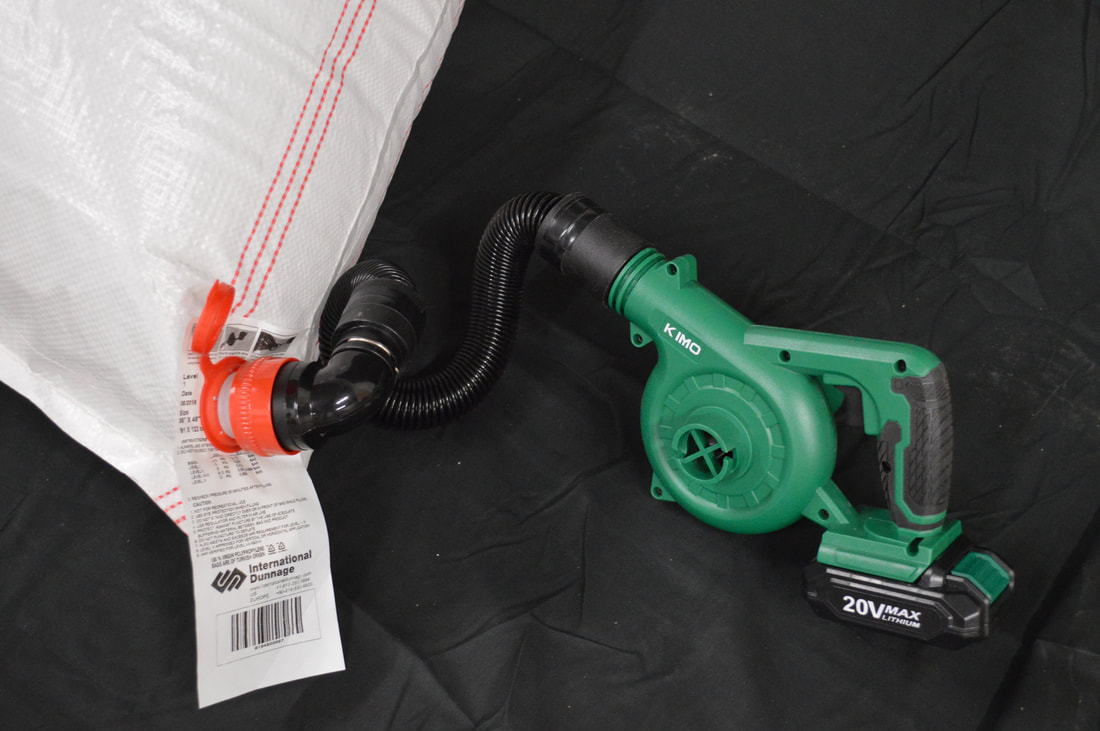
In the landscape of modern shipping, speed, precision, and ease of use are the cornerstones of efficient packaging operations. At Superior Packaging Company, we recognize the critical need for tools that empower your team to secure shipments swiftly and effectively, no matter the location or the task at hand. That's why our Portable Air Tool stands out as a must-have – a lightweight yet powerful solution designed to streamline your void fill processes and ensure the safety of your valuable goods.
While Superior Packaging Company offers a comprehensive suite of void fill solutions, including various dunnage air bag sizes and complete inflator kits, the Portable Air Tool by itself provides efficient packaging workflows. It's the key that unlocks the full potential of our air bag systems, providing a level of control and convenience that traditional methods simply can't match. The Superior Packaging Company Portable Air Tool: Engineered for Performance Our Portable Air Tool is meticulously designed with the user in mind. Its lightweight construction minimizes fatigue during extended use, while its ergonomic grip ensures comfortable and secure handling. The robust build quality guarantees durability, standing up to the demands of busy shipping environments. Typically featuring a simple, one-touch operation or an easily manipulated trigger mechanism, the tool allows for precise inflation control, ensuring each air bag is filled to the optimal pressure for maximum load stability. Many models within our Portable Air Tool range are electrically powered, offering consistent and reliable inflation without the need for external air sources. This eliminates the hassle of hoses and compressors, providing true portability. Unlocking a Spectrum of Benefits with Our Portable Air Tool Investing in a Superior Packaging Portable Air Tool carries many advantages for your packaging operations: 1. Unparalleled Portability and Flexibility: The core strength of our Portable Air Tool lies in its freedom of movement. Whether you're working on a crowded loading dock, packing delicate instruments in a cleanroom environment for the pharmaceutical industry, or securing oversized industrial components in a remote warehouse, this tool goes where you need it. This eliminates bottlenecks and allows for efficient void fill application at the point of packing. 2. Enhanced Speed and Efficiency: Time saved in the packaging process directly impacts your bottom line. Our Portable Air Tool allows for rapid inflation of dunnage air bags, significantly reducing the time your team spends on load securement. With its intuitive operation, packers can quickly and accurately fill the necessary air bags, leading to faster turnaround times and increased shipping throughput, crucial for meeting tight deadlines. 3. Precise Inflation Control: Over- or under-inflated air bags can compromise their protective capabilities. Our Portable Air Tool offers precise control over the inflation process, ensuring that each air bag is filled to the optimal pressure for the specific void and the weight of the cargo. This accuracy maximizes load stability and minimizes the risk of damage during transit. 4. User-Friendly and Safe Operation: We prioritize the safety and comfort of your workforce. The ergonomic design of our Portable Air Tool reduces strain and fatigue, even during prolonged use. The straightforward operation minimizes the learning curve, allowing new team members to become proficient quickly. Safety features are integrated into the design to ensure a secure and efficient packing process. 5. Seamless Integration with Our Air Bag Systems: Our Portable Air Tool is specifically designed to work seamlessly with Superior Packaging's comprehensive range of dunnage air bags and other void fill solutions, including our durable Corrugated Dunnage and stabilizing Rubber Pallet Bands. This ensures compatibility and optimal performance, creating a cohesive and reliable load securement system for all your shipping needs. 6. Cost-Effective Solution: While the Portable Air Tool is a valuable investment, its impact on efficiency and damage reduction translates to significant long-term cost savings. Faster packing times reduce labor costs, and the superior protection offered by properly inflated air bags minimizes returns, replacements, and insurance claims, directly impacting the profitability of your industrial and technology shipments. 7. Versatile Applications Across Industries: The adaptability of our Portable Air Tool makes it a valuable asset across various sectors. From quickly securing pallets of beverages in the food and beverage industry to providing targeted void fill for sensitive electronics in the technology sector and ensuring the stability of pharmaceutical shipments, this tool offers a flexible solution for diverse packaging requirements.
Empower Your Packaging Process with Superior Packaging Company
At Superior Packaging Company, we are dedicated to providing innovative tools that empower your team and protect your products. Our Portable Air Tool is a prime example of this commitment – a powerful, versatile, and user-friendly solution that brings efficiency and control directly to your fingertips. Ready to experience the difference a high-quality portable air tool can make in your shipping operations? Contact Superior Packaging Company today to learn more about our Portable Air Tool and our complete range of load securement solutions. Let us help you streamline your packaging process, minimize damage, and ultimately, elevate your shipping efficiency, right here in Duluth and across the nation. The power to secure your shipments efficiently is now in your hand. |
Recent NewsArchives
May 2026
Categories
All
|